
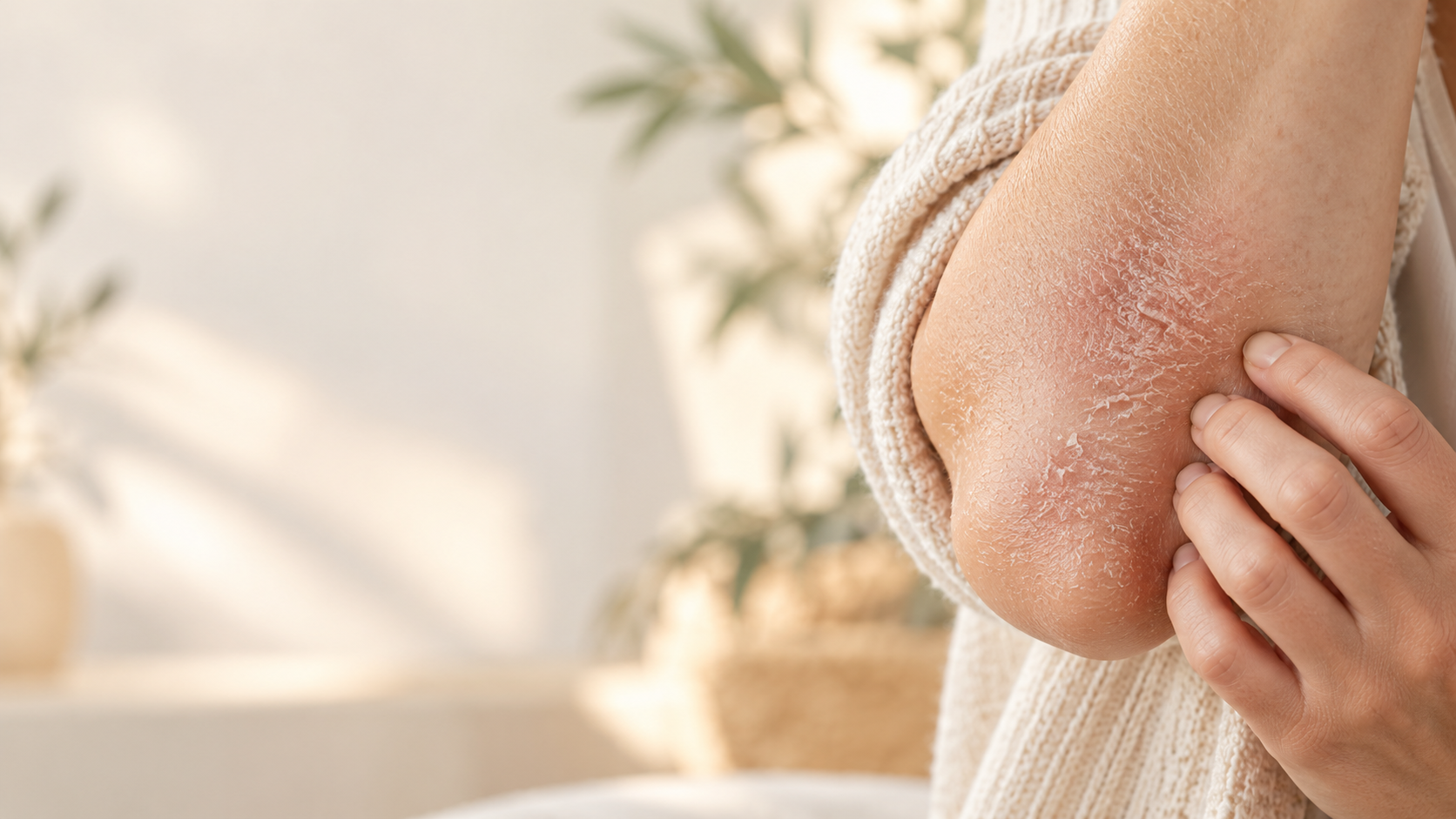
Why Skin Becomes Dry
Discover the common causes of dry, flaky skin, how moisture loss affects the skin barrier, and practical ways to care for dry and sensitive skin throughout the year.
UNDERSTANDING ECZEMA-PRONE SKIN
Eczema-Prone Skin Explained: Understanding Your Skin's Needs
Living with eczema-prone skin can make everyday skincare feel more complicated than it needs to be. Understanding your skin, keeping it comfortably moisturised and developing a gentle routine can make caring for it a more manageable part of daily life.
Eczema is a term used for a group of conditions that can cause dry, itchy and inflamed skin. One of the most familiar forms is atopic dermatitis, which can affect both children and adults.
For some people, eczema-prone skin feels dry and uncomfortable at certain times of the year. Others experience recurring patches that need consistent attention.
The appearance of eczema also varies. Skin may look reddish, darker, rough, flaky or discoloured depending on the person's natural skin tone and the area affected.
Although everyone's experience is different, one principle remains central to everyday eczema skincare: maintaining comfortable, well-moisturised skin is important.
A thoughtful routine can help reduce everyday dryness and make skincare feel simpler. For people who enjoy botanical skincare, understanding moisturising ingredients and product textures is a useful starting point.
WHY MOISTURE MATTERS
The Skin Barrier: Your Skin's Natural Protection
Your skin is more than the surface you see. Its outermost layer forms an important protective barrier that helps retain moisture while protecting the body from everyday environmental influences.
This barrier contains skin cells, natural lipids and moisture-binding substances. Together, they help the skin remain flexible, comfortable and protected.
People with eczema-prone skin often experience difficulties maintaining this protective barrier. As a result, water can escape more readily, contributing to dryness and discomfort.
Skin that loses moisture may feel tight after bathing, rough to the touch or noticeably flaky. This is why a regular moisturising routine plays such an important role in everyday eczema care.
Keeping Skin Soft
Emollient ingredients help soften the skin's surface and improve the feel of dry, rough areas.
Retaining Moisture
Moisturising products can help reduce water loss, supporting softer and more comfortable skin.
This is one reason dermatology organisations place such a strong emphasis on moisturising as part of an eczema skincare routine.
Choosing products that suit your individual skin, and using them consistently, can be more useful than frequently changing your entire routine.
GETTING TO KNOW YOUR SKIN
Common Characteristics of Eczema-Prone Skin
Eczema-prone skin does not look or feel exactly the same for everyone. Some people experience occasional dry patches, while others notice recurring sensitivity in particular areas of the body.
Understanding these characteristics can help you recognise when your skin may benefit from extra moisture and a gentler routine.
Dryness and Roughness
Skin may feel dry, tight or uneven, especially after washing or exposure to dry weather.
Flaking and Scaling
Moisture loss can make small flakes or dry patches more noticeable on the surface.
Itching and Discomfort
Eczema is frequently associated with itching, which may become more noticeable when skin is dry.
Recurring Sensitive Areas
Particular areas may repeatedly become uncomfortable, depending on individual skin characteristics and environmental influences.
Elbows, knees, hands, wrists, ankles and skin folds are among the areas where eczema symptoms may occur.
Children's eczema can sometimes appear in different locations from adult eczema, and symptoms can change with age.
The practical lesson is to pay attention to your skin's individual patterns and choose a routine that responds to its needs.
EVERYDAY SKINCARE INFLUENCES
What Can Make Eczema-Prone Skin Feel Uncomfortable?
People with eczema-prone skin often notice that certain situations affect how comfortable their skin feels.
These influences differ from person to person. Rather than assuming everyone has the same experience, it helps to become familiar with your own patterns.
Weather and Seasonal Changes
Low humidity, cold air and indoor heating can contribute to dry-feeling skin.
In South Africa, seasonal conditions vary considerably. Dry inland winters may call for a richer moisturising routine, while humid coastal conditions may feel different.
Bathing and Washing
Frequent washing, long showers and very hot water can contribute to moisture loss.
Choosing comfortably warm water and applying moisturiser after bathing are simple habits that can support skin comfort.
Clothing and Fabrics
Rough fabrics and friction may make sensitive skin feel uncomfortable.
Soft, breathable clothing can be helpful, particularly when the skin already feels itchy or dry.
Everyday Cleansing Products
Different skin types respond differently to soaps, detergents and fragranced personal care products.
Keeping your routine gentle and uncomplicated can make it easier to understand what suits your skin.
A good skincare routine is not about doing more. It is about understanding what your skin needs and caring for it consistently.
PRACTICAL SKINCARE GUIDANCE
Building a Gentle Daily Routine for Eczema-Prone Skin
An effective everyday skincare routine does not need a complicated collection of products.
Gentle cleansing, regular moisturising and paying attention to the way your skin responds are sensible foundations.
Consistency is particularly valuable because dryness can return even after skin has started feeling more comfortable.
Cleanse Gently
Choose a mild cleansing product and avoid vigorous scrubbing. Gentle handling can help maintain skin comfort.
Use Comfortable Water
Prefer lukewarm water and keep baths or showers relatively short.
Moisturise After Bathing
Gently pat skin dry and apply an appropriate moisturiser while the skin is still slightly damp.
Maintain Your Routine
Continue regular moisturising, particularly when your skin feels dry or uncomfortable.
Why Routine Matters
Many people focus on moisturising only when their skin becomes noticeably dry.
However, ongoing care is useful because maintaining moisture is easier when it becomes part of an everyday habit.
Applying a suitable moisturiser after washing, before bedtime or at other convenient points during the day can help establish consistency.
The best routine is one that is comfortable, practical and suited to your skin.
UNDERSTANDING SKINCARE TEXTURES
Choosing Moisturising Products for Dry and Sensitive Skin
Moisturisers come in different textures and formulations. Understanding these differences can help you decide what you enjoy using.
Lotions
Lotions tend to have a lighter consistency and may be preferred by people who enjoy a less rich skincare texture.
Creams
Creams generally offer a richer texture and are commonly used for daily moisturising.
Rich Balms and Ointments
Rich balms and ointments usually contain a larger proportion of oils, butters or other lipid-based ingredients.
They can help soften dry-feeling areas and reduce moisture loss, making them an appealing option for people who prefer more substantial skincare.
The Value of Shea Butter
Shea butter is a plant-derived fat widely used in moisturising formulations.
Its rich, emollient texture helps soften and smooth dry-feeling skin.
Raw, unrefined shea butter is particularly valued in botanical skincare for its naturally rich composition and distinctive buttery consistency.
For a person who enjoys plant-based body care, a shea-butter-rich balm may fit beautifully into an uncomplicated daily moisturising routine.
INSPIRED BY NATURE
The Appeal of Botanical Skincare Ingredients
Botanical skincare brings together ingredients derived from plants, including natural butters, oils and herbal preparations.
For many people, the appeal lies in the ingredients themselves, their textures, and the connection between everyday skincare and nature.
South Africa has a strong botanical heritage, with plants such as rooibos forming part of the country's natural identity.
Raw, Unrefined Shea Butter
Shea butter has long been used in cosmetic formulations because of its emollient qualities and luxurious, rich consistency.
It is especially well suited to product formats that emphasise softness and moisture retention.
Chamomile
Chamomile is a familiar botanical associated with traditional herbal preparations and is used in a range of personal care products.
Rooibos
Rooibos is a proudly South African plant with a distinctive place in local botanical traditions.
It is used in teas, botanical preparations and cosmetic formulations.
Thoughtfully Selected Plant Oils
Plant-derived oils are commonly included in cosmetic products to provide texture and emollient qualities.
The finished formulation determines how these ingredients work together to create the product's overall feel.
At Little Leaf, botanical ingredients are central to our approach to skincare and wellness.
LITTLE LEAF SIGNATURE SKINCARE
Discover Living With Eczema Balm
Inspired by nature and the importance of caring for dry, sensitive skin, Little Leaf Living With Eczema Balm is our signature botanical skincare product.
Featuring raw, unrefined shea butter and carefully selected botanical ingredients, this rich, fragrance-free balm offers a beautifully simple way to incorporate moisturising care into your everyday routine.
Its rich texture helps soften dry-feeling skin and provides a comforting moisturising experience.
Rooted in Nature. Created with Care.
Little Leaf was built around an appreciation for natural ingredients and a genuine interest in the people who use our products.
Our signature balm reflects that philosophy through its straightforward botanical character and rich moisturising texture.
Customers have also shared encouraging experiences with Little Leaf, including personal feedback about incorporating the balm into their skincare routines.
You can explore genuine customer feedback and photographs on our homepage.
Explore Customer Experiences →COMFORTABLE EVERYDAY CARE
Finding a Skincare Routine That Works for Your Lifestyle
Everyone's skincare preferences are different. Some people enjoy a lightweight routine, while others prefer the feeling of a rich balm on dry areas.
Whatever your preference, consistency and simplicity are valuable principles.
A practical routine may involve keeping your favourite moisturiser close after bathing, using gentle cleansing products and paying attention to changes in the weather.
For people who experience recurring dryness, maintaining a routine throughout the year can be particularly helpful.
Winter Skincare
During cooler, drier months, the skin may benefit from more frequent moisturising. Areas such as elbows, hands and legs often need extra attention.
Summer Skincare
Summer brings different routines, including swimming, sun exposure and more frequent washing.
Regular moisturising remains useful, alongside appropriate sun protection.
Skincare for the Whole Household
Different family members may have different skincare preferences and requirements.
Choosing suitable products and following age-appropriate care guidance helps make everyday routines more manageable.
Little Leaf believes skincare should feel personal, uncomplicated and connected to your everyday life.
CONTINUE EXPLORING
Understanding Dry Skin and Moisture Loss
Dryness is one of the most familiar characteristics of eczema-prone skin, but dry skin can also occur without eczema.
Understanding moisture loss, everyday influences and moisturising ingredients can help you make more informed skincare choices.
Next Little Leaf Skincare Guide
Explore our guide to why skin becomes dry, how the skin barrier retains moisture, and the role moisturising products play in everyday care.
Why Skin Becomes Dry: Causes, Prevention & Everyday Skincare Guidance
This related guide can be accessed through the Skincare Education section on our homepage.
Explore Skincare Guides →COMMON SKINCARE QUESTIONS
Eczema-Prone Skin: Frequently Asked Questions
1. What does eczema-prone skin mean?
Eczema-prone skin describes skin that is susceptible to eczema symptoms such as dryness, itching and recurring irritation. Its moisture barrier may need consistent attention as part of everyday care.
2. Why is moisturising important for eczema-prone skin?
Regular moisturising helps soften dry skin and reduce moisture loss. It is widely recommended as part of everyday eczema skincare.
3. Can weather affect eczema-prone skin?
Yes. Dry air, cold weather and indoor heating can contribute to skin dryness. Individual responses to seasonal changes vary.
4. Are rich balms useful for dry skin?
Rich balms commonly contain emollient and occlusive ingredients that help soften dry-feeling skin and reduce moisture loss.
5. What makes shea butter popular in skincare?
Shea butter is valued for its rich texture and emollient properties. It is used in many moisturising skincare products to help soften dry-feeling skin.
6. How often should dry skin be moisturised?
Regular daily moisturising is commonly recommended. Applying moisturiser after bathing and whenever skin feels dry can help maintain comfort.
7. Does Little Leaf Living With Eczema Balm contain added fragrance?
No. Little Leaf Living With Eczema Balm is made without added fragrance and has a rich botanical texture.
8. Where can I read real Little Leaf customer experiences?
Our homepage includes genuine customer feedback and original photographs shared with Little Leaf. You can visit the Customer Experiences section to read more.
EDUCATIONAL RESOURCES
Further Reading: Eczema and Everyday Skincare
For readers who would like to learn more about eczema-prone skin and moisturising routines, these established dermatology organisations provide additional educational information.